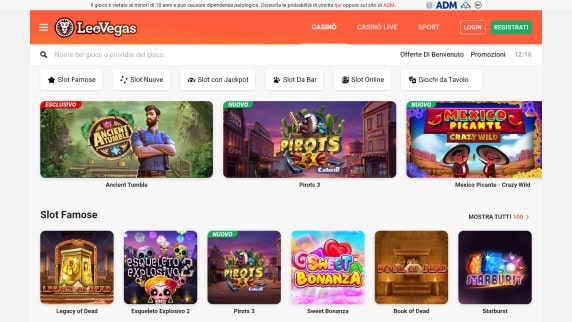
Most casino landing pages hardly reference the cashier. But it’s the first place where an online casino proves its promises are practical. At LeoVegas Casino, the cashier isn’t a hidden tool behind the games; it’s the account wallet that connects deposits, withdrawals, bonuses, transaction history, and identity checks. For Italian players, that counts. A polished lobby means nothing if moving money appears slow, confusing, or fragile. This review traces the cashier’s real job and uses it to evaluate the wider LeoVegas offering, from game categories and headline promotions to payment methods, licensing, security, mobile play, and the details that distinguish a smooth casino account from a frustrating one.
Why the Cashier Is the Initial Real Test of an Online Casino
Before anyone engages with a slot or joins a live table, the cashier sets expectations about swiftness, transparency, and control. A properly designed casino account presents the accessible deposit methods, the minimum and maximum caps, any charges, and the duration each transaction will take. It also tracks pending withdrawals, bonus balances, and the identity documents that might be needed before a payout. LeoVegas Casino presents this area as part of the account, not a distinct mystery. That’s the right approach for Italian players who expect transparent banking. The practical test is simple: can a new user understand what will happen to their money without accessing five help pages?
The cashier also links gameplay and compliance. When a player submits a withdrawal, the system may check if the account is verified, if bonus wagering requirements are met, and if the chosen payment method enables payouts in the player’s name. Those checks are standard in regulated markets, and they’re easier to accept when the cashier explains them before the request is submitted. LeoVegas Casino profits from treating the cashier as a dashboard, not a checkout counter. Balances, limits, and transaction status should all be displayed in one place. For readers evaluating casinos, that’s a more meaningful signal than a flashy homepage banner, because it shows how the operator handles the moments that count after registration.
The cashier also reveals the gap between a demo-friendly casino and a withdrawal-friendly one. A site can offer hundreds of games and still fail when a player seeks a bank transfer, an e-wallet payout, or a card refund. The cashier should make the available routes clear, specify whether the player must use the same method for deposits and withdrawals, and mark any processing window. LeoVegas Casino can transform this into a strength by maintaining the language plain and the status updates frequent. Italian players should read the cashier notes before depositing, because the best time to discover a limit or verification requirement is before money is in play, not after a win.
Payment Methods and Transaction Times in the Italian Market
Selecting a payment option is personal, and a casino cashier should present the compromises clear. In the Italian market, players frequently come across debit and credit cards, prepaid cards, e-wallets, instant bank transfer services, and traditional bank transfers. The specific mix at LeoVegas Casino should be confirmed inside the logged-in cashier. Deposits are normally quick: cards and e-wallets often credit near-instantly, bank transfers need longer. Withdrawals are the more important test. E-wallet payouts are inclined to be faster than card refunds or bank transfers, but verification and internal review can extend time. Players should check minimum and maximum limits, any fees, and whether the payout method must match the deposit method before choosing a route.
Processing times are rarely one-size-fits-all. Responsible operators refrain from guaranteeing instant money when checks are still pending. A common pattern: the casino sanctions a withdrawal after account verification, then the payment provider decides how quickly funds come in. E-wallets may resolve within hours or a business day, card refunds can require several business days, and bank transfers may take longer depending on the bank. LeoVegas Casino should be assessed on how clearly it states these windows and whether the cashier displays a pending status with an expected next step. Italian players should complete identity verification early, maintain payment details matching with the account name, and refrain from seeking a withdrawal while bonus wagering is still active.
Fees and limits merit the same focus as speed. Many regulated casinos fail to charge a deposit fee, but payment providers may impose their own charges, and some withdrawal routes may have minimum thresholds. The cashier should indicate whether a fee applies before the player approves the transaction, not after. LeoVegas Casino can enhance its Italian appeal by maintaining limits sensible for casual players while still serving higher-value users, and by making the cashier’s help text detailed, not generic. Players should also check whether a dormant account, a currency conversion, or an atypical payment method alters the cost. A few minutes dedicated reading the cashier’s payment notes can prevent a unforeseen deduction later.
The Gaming Area Behind the Cashier
The lobby is the spot where the cashier’s day-to-day duties meets the fun. LeoVegas Casino structures that offering around recognizable sections, not a maze. Slots form the largest section: video reels, traditional slots, megaways slots, and jackpot titles are all there. Table titles cover the roulette wheel, blackjack, baccarat, and poker variants. The live dealer area brings actual dealers, live-streamed tables, and interactive games into the same wallet. A good lobby includes search, provider filters, and obvious game data so users can assess variance, wagering limits, and regulations before staking money. For Italian players, the main point isn’t just quantity. It’s if the categories are simple to browse and if the account balance carries over from one game to another without confusion.
Slot machines deserve scrutiny because they control most digital casino sections and often offer the largest stake ranges. LeoVegas Casino Casino’s slot catalogue should be examined for breadth of providers, number of paylines and ways to win, extra features like bonus spins and expanding wilds, and the inclusion of high-risk slots alongside lower-risk titles. Users who prioritize budget control should verify the lowest bet and the top payout rules before spinning, because those specifics are found in the game information, not the marketing copy. The account stays important: every spin taps into the same wallet balance, and any bonus funds may be governed by game limitations. A good casino keeps that link apparent so players don’t learn about restrictions solely when they seek to take out funds.
Live gaming and table offerings bring a different tempo, and they’re typically where veteran users judge an operator’s refinement. A live gaming area should show table limits, dealer languages spoken, video quality, and the regulations for each variant before a user sits down. LeoVegas Casino can attract players from Italy by offering standard roulette and blackjack formats alongside spectacle live games. But the practical points stay consistent: verify the table minimum stake, confirm whether side bets are available, and grasp how the live account balance interacts with bonuses. Table offerings may count differently to betting than video slots, so the wallet and bonus conditions need to be read together. That’s when an lively casino experience becomes genuinely useful, not just noisy.
Bonuses That Fund the Cashier, Not Just the Banner
Bonuses are the most visible part of most casino homepages, but the cashier is where they become real. A welcome offer may combine a deposit match with free spins. Ongoing promotions can include reload bonuses, cashback, or tournament entries. The important details are rarely in the headline: wagering requirements, eligible games, maximum bet rules, expiry periods, and the maximum conversion from bonus funds all shape the actual value. LeoVegas Casino should be assessed on whether these terms are easy to find before opt-in and whether the cashier separates real money from bonus money clearly. Italian players should treat every promotion as a contract with conditions, not free extra credit, and should confirm eligibility before depositing.
The cashier’s bonus display is a helpful diagnostic tool. If a player can see the bonus balance, the remaining wagering requirement, and the time left to complete it, the promotion feels manageable. If those figures are hidden in a terms page, the experience becomes a guessing game. LeoVegas Casino can earn trust by showing bonus progress alongside the main wallet and explaining which games contribute to wagering. It also helps when the cashier warns that a withdrawal request may cancel remaining bonus funds, because that’s a common source of frustration. Readers should review the promotion’s game weighting and maximum bet before playing, since a single oversized bet can void a bonus even when the rest of the play looks compliant.
Not every bonus suits every player, and the cashier helps reveal that mismatch. A high-percentage match with a long wagering requirement may attract someone who plays frequently and understands the rules. A smaller cashback-style offer may be more practical for a casual player who wants less commitment. LeoVegas Casino’s promotions should be contrasted by effective value, not by the biggest number on the banner. Players should determine whether the bonus is worth the extra play, whether their favourite games count toward the requirement, and whether the withdrawal limit makes the prize less exciting. In Italy, local rules and account verification can also influence how promotions are applied, so the official terms and cashier messages should be reviewed before opting in.
Playing on Mobile and the Payment Area on the Fly
Mobile support doesn’t represent a bonus feature for Italian players; it’s the standard way many people get into casino accounts. LeoVegas Casino’s mobile experience must preserve the same cashier functions as the desktop version: deposits, withdrawals, bonus progress, transaction history, and responsible gambling controls. A responsive browser site might be enough, while a dedicated app can add convenience through notifications and faster access. The critical test is whether the cashier remains readable on a small screen and whether payment confirmations are clear before a finger hits the final button. Players ought to avoid making withdrawals on unstable connections and ought to log out on shared devices, because convenience should never come at the cost of account security.
Gameplay on mobile also alters how players should think about budgets and bonuses. Slots and live tables start quickly on modern phones, and the cashier balance can move with every tap. Setting a deposit limit before a session is more useful than attempting to stop midway. LeoVegas Casino ought to make it easy to check the active bonus and its wagering progress from a phone, because small screens may hide important details. Italian players should confirm that their preferred payment method works smoothly in the mobile cashier and that any app download originates from the official source. A casino that treats mobile as a first-class channel will keep the cashier just as clear on a phone as on a laptop.
Regulation, Safety, and the Record Players Should Expect
Licensing requirements is the backbone of a trustworthy casino cashier because it dictates how disputes, identity checks, and player funds are managed. LeoVegas Casino functions in regulated markets, and players in Italy should check for the local authorisation details shown in the site’s legal or footer area. A proper licence doesn’t guarantee a ideal experience, but it implies the operator must adhere to rules on advertising, account security, responsible gambling, and dispute resolution. The cashier should tie into those obligations through explicit KYC prompts, transaction records, and limits that players can configure. Readers should confirm the current licence information on the official page rather than relying on a third-party summary, because regulatory details can be updated.
Security at the cashier level is mostly hidden, and that’s exactly how it should operate. Players should expect encrypted connections, secure login options, and monitoring that identifies unusual account activity. Identity verification is not an obstacle devised by the casino; it’s a regulated requirement meant to prevent fraud, money laundering, and underage access. LeoVegas Casino should keep verification simple by specifying acceptable documents and explaining how long checks typically take. Italian players can reduce friction by providing clear documents early and confirming that the name on the payment method corresponds to the account. A cashier that describes these steps in plain language seems far more credible than one that simply stops a withdrawal with a unclear error message.
Responsible gambling tools are included in the same paper trail, and they should be simple to find from the cashier or account settings. Deposit limits, loss limits, session reminders, time-outs, and self-exclusion options are common in regulated markets. Their presence counts more than a generic statement about playing safely. LeoVegas Casino should show these controls clearly, with explanations of when a limit applies and how it can be changed. Players should try the settings before they require them, because a limit configured in calm moments is more helpful than one asked for during a losing streak. The cashier is the ideal home for such controls since it already governs money movement, and that integration is a indicator of a mature casino account.
What Really Distinguishes LeoVegas Casino Apart
The main difference isn’t a single game or a banner number; it’s the way the whole account fits together. LeoVegas Casino presents a broad lobby, live dealer tables, a mobile-first presentation, and a cashier that should make deposits, withdrawals, and bonus progress understandable. That combination counts for Italian players who want entertainment without losing sight of their balance. The brand’s energetic style is reinforced with practical features like transaction history, verification prompts, and responsible gambling controls. When those elements work together, the cashier no longer feels like paperwork and feels more like the control room of the casino experience. That’s the real story the title implies, and it’s more persuasive than any isolated promotion.
Another distinguishing point is the balance between breadth and usability. A huge game library can intimidate newcomers, so search tools, category filters, and clear game tiles do real work. LeoVegas Casino should be assessed on whether a player can move from a slot to a live table and then to the cashier without losing context or encountering contradictory messages. Italian players profit when the site uses familiar language, shows limits in euros, and explains payment steps without jargon. The cashier’s transaction history is especially useful because it creates a record that can be checked later. In a market full of similar-looking casinos, this kind of operational clarity is a genuine differentiator, not a decorative claim.
Finally, the real story of the cashier is about trust repeated at small moments. A deposit confirmation that appears immediately, a withdrawal status that explains the next step, a bonus balance that matches the terms, and a support page that answers the obvious question all build confidence. LeoVegas Casino can contend on entertainment, but its lasting impression will come from whether the cashier behaves predictably when money is moving. Italian players should use the official site to check current payment methods, promotion terms, licensing details, and mobile options before committing. The casino that makes those checks easy is the one that deserves a second visit, because the cashier is where excitement meets accountability.